Objets d'Art and Curios
St Marnock's contains a number of other items of historic significance which offer a window into some interesting aspects of nearly 600 years of worship in St. Marnock’s, Fowlis.
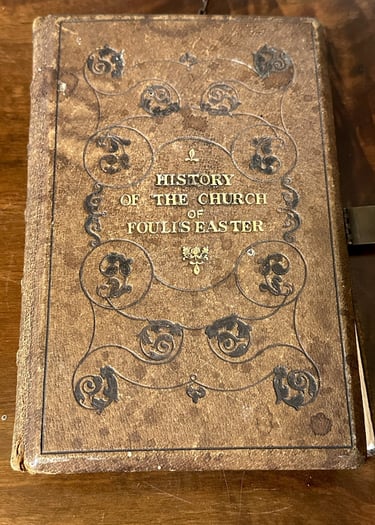
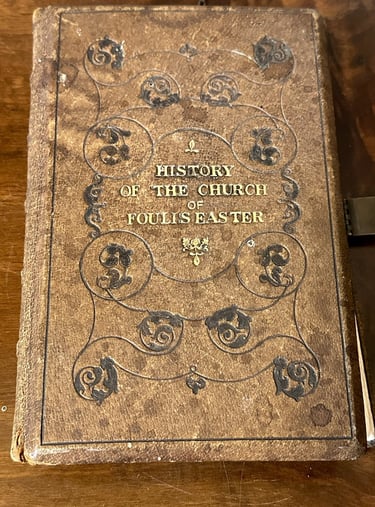
This handsomely-bound volume is a presentation copy of the book by Arthur B. Dalgetty, which was published in Dundee in 1933. It was Dalgetty who stepped into the breach noted by the writer of the New Statistical Account, who lamented the lack of ‘some antiquary capable of rescuing [the church] from unmerited obscurity’.
A B Dalgetty was a Medical Superintendent of Dundee Hospitals but, as a respected archaeologist and a member of the Society of Antiquaries of Scotland, he proved the perfect man for the job. His book is meticulously researched and draws widely on the expertise of professionals in various fields. It also includes accurate and beautifully coloured reproductions of the paintings by the artist Tom Ross. Nearly a century later it still stands as the first port of call for anyone wishing to learn about the history and contents of this unique building.
History of the Church of Foulis Easter
Fowlis Easter Breviary
A breviary is a calendar of saints’ days, an invaluable reference book for the clergy who had to arrange appropriate masses. Strictly speaking the Fowlis Easter Breviary is not in the church, but it is so intimately connected with it, and such a miraculous survivor, that it fully deserves a mention. It is a small volume, bound by its original wooden boards and immaculately written on vellum. It is held by the National Library of Scotland and its Fowlis provenance is attested in a marginal note by a priest known to have officiated here. It dates from the mid-15th century and includes references to events in Scotland and within the Mortimer family of Fowlis Easter. Although you can’t see the book in the church itself, something very like it keeps cropping up in the artwork: Mary’s Bible in the Annunciation carving and the gospels clasped in the hands of the apostles. Christ himself, centre stage in the row of saints, holds his own book open to reveal the Word of God.
Alms dishes are particularly associated with Nuremberg. This example dates from 1487 and, typically, depicts Adam and Eve in the Garden of Eden. Although it is usually referred to as an alms dish it has also been suggested that it was used as a font; no doubt it could hold enough water to sprinkle on an infant’s head.
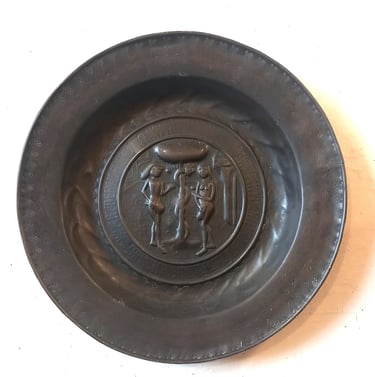
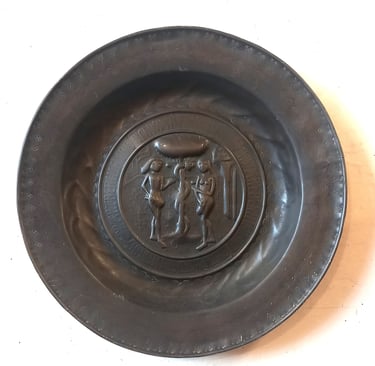
Alms Dish
Dove and Ark Painting
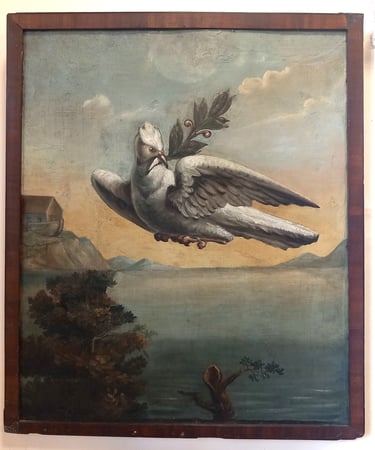
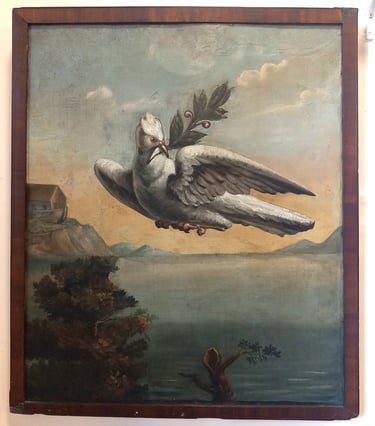
This is painted on a thin copper sheet, 74 cm in height, with width 58 cm at the top and 63 cm at the bottom. The dove in the centre of the painting has an olive branch in its beak and soars above the ark which is perched on rocks on the bottom left. This may have been part of a chest or coffer.
Collection box
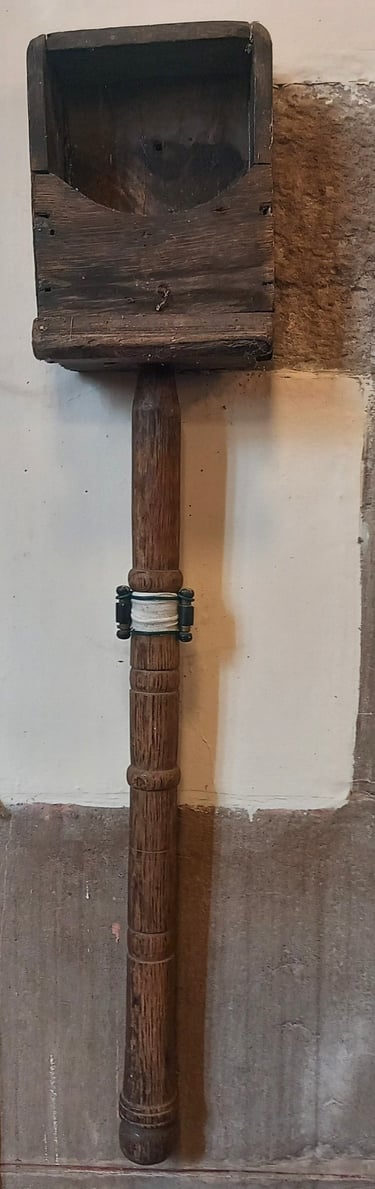
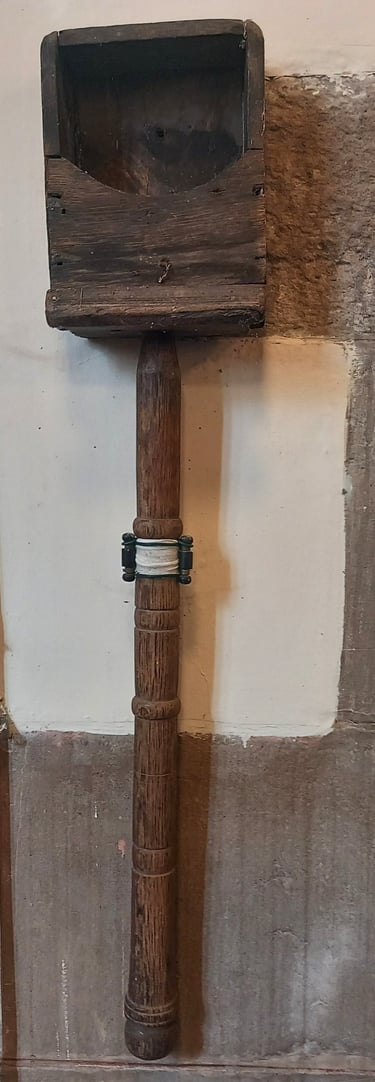
Before the Reformation only the privileged would have had fixed seats in the church – the rest either stood or brought their own stools. Once pews were installed a method had to be devised to ensure no-one was out of reach during the collection. Long-handled ladles did the trick. Incidentally this method is still employed today!
Jougs
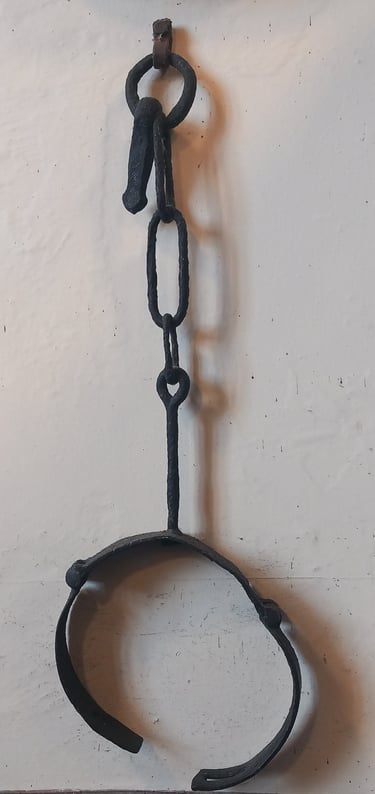
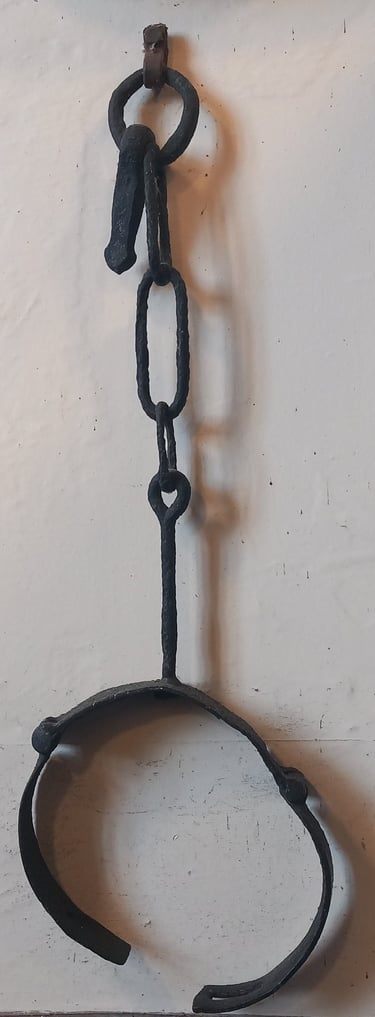
Discipline was strict in the 17th century and if you were caught Sabbath-breaking or engaging in other unholy practices your punishment might be to be locked by the neck in the jougs (from Latin iugum, a yoke). Originally these were sited outside the church door, where offenders would be subjected to the full – and probably unsympathetic – attentions of the congregation. When some boys took things too far and left one of their playmates locked up and half strangled, the jougs were moved into the church for safe-keeping and the key thrown into the Fowlis Burn.
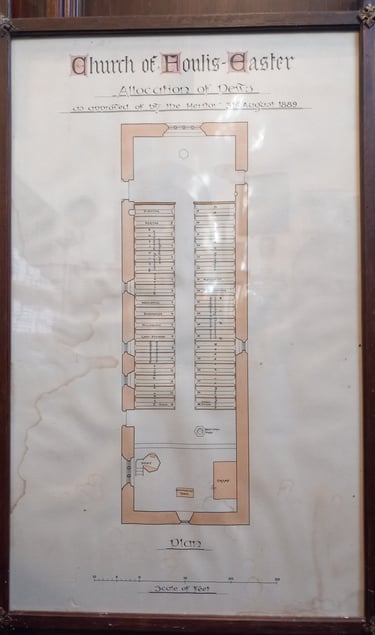
This dates from 1889, when the present pews were installed. The seating arrangement is a good indication not only of the ‘pecking order’ of the local inhabitants, but also of their numbers and occupations. In the days when everyone was expected to attend Sunday service, the large farms, especially, required multiple pews to accommodate their workforce.
Seating Plan
Contact
Get in touch for questions
stmarnocksfowlis@gmail.com
© 2025. All rights reserved.
Scottish Charity
Friends of St Marnock's
SC054653