Sculpture
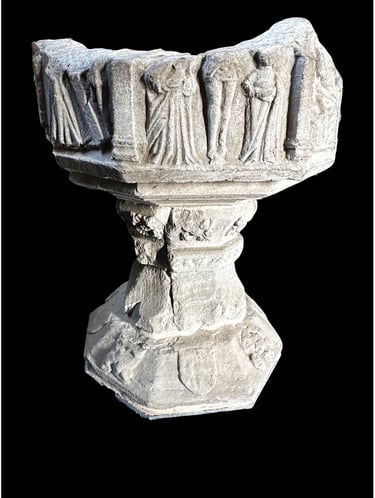
Though at first glance the eye may be caught by the rows of dark Victorian pews, the beauty of Fowlis Church lies in the astonishing completeness of its 15th century furnishings and decoration. It requires little effort – aided perhaps by some gentle guidance – to imaginatively reconstruct the complexity, richness and vitality of the mediaeval liturgical environment.
Baptismal Font
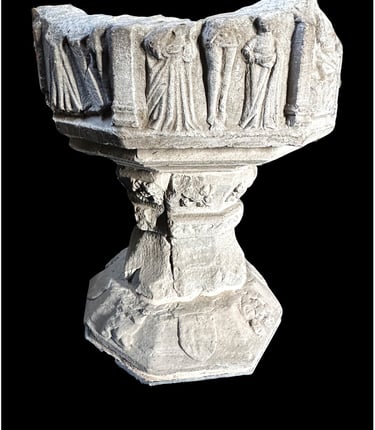
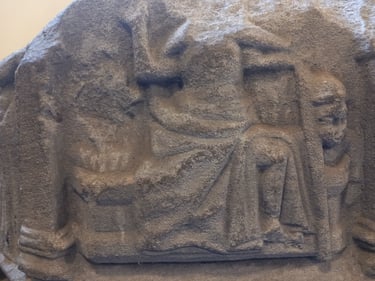
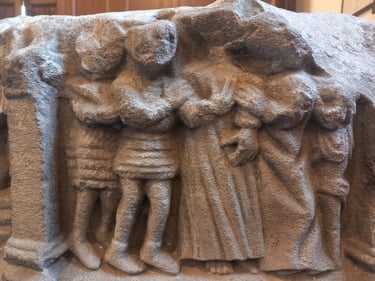
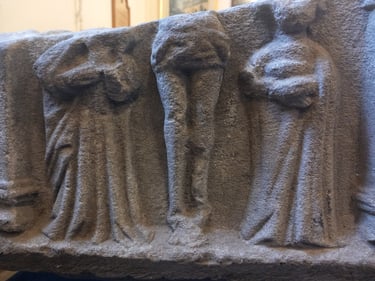
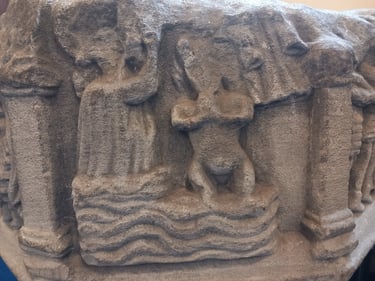
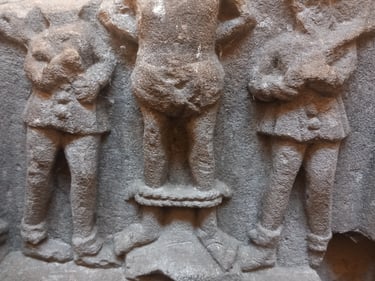
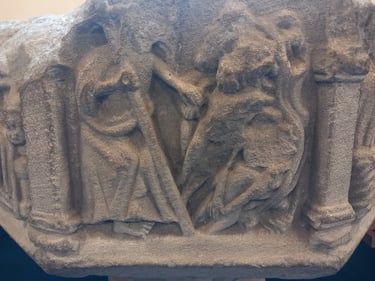
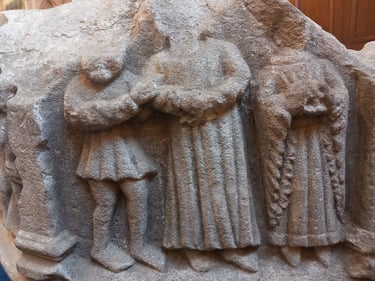
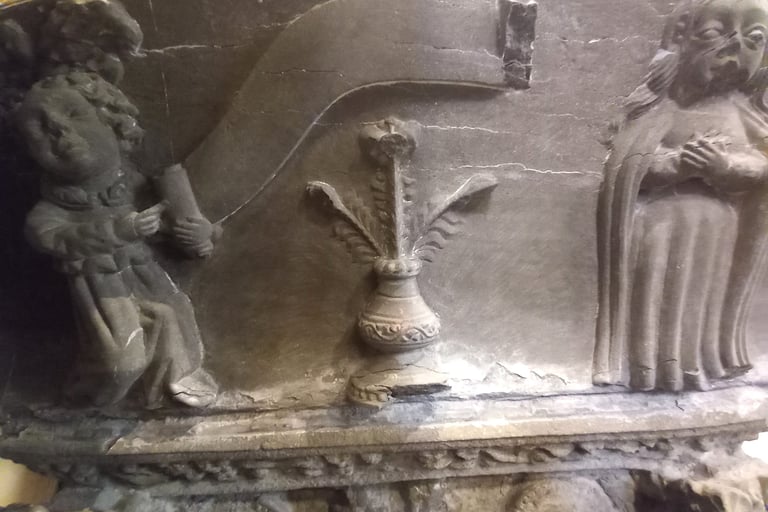
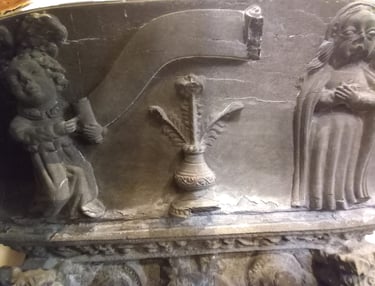
Baptism gave entry into the Christian community, hence the position of the font just inside the entrance of the church. This battered survivor – victim of neglect and the iconoclasts – nevertheless retains much of its magnificence and more than holds its own against other surviving examples of its type. Seven of its eight sides bear representations of the stations of the cross, from the baptism of Christ to his death and resurrection. On the eighth, Christ leads the souls of the dead out of Hell, which is portrayed as the mouth of a fearsome dragon (look for its flaring nostrils and the vertical row of teeth). Coats of arms on the base bear witness to the noble pedigree of the church, while the stylised flowers echo those on the entrance canopy.
The font has had its adventures. Flung out into the churchyard, it was retrieved and taken to a Highland hunting lodge where it served as a garden ornament. Thanks to the efforts of the local schoolmaster, it was finally returned to the church in 1865.
Holy water stoups
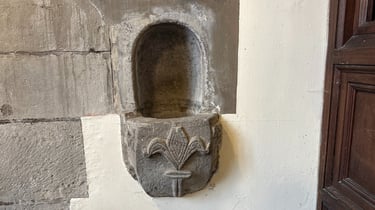
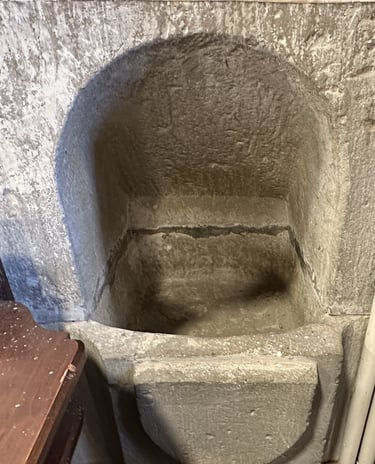
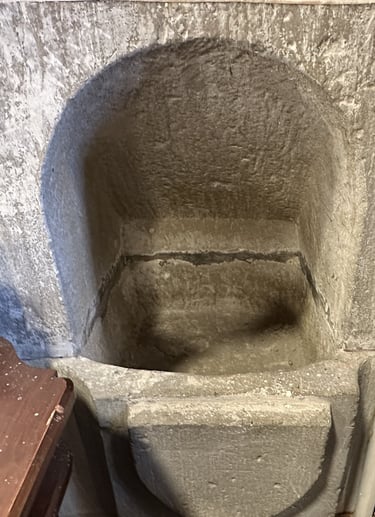
These stone basins, one on either side of the north and south entrances, held consecrated water which was used to purify the hands before making the sign of the cross and entering the sanctuary.
Chancel
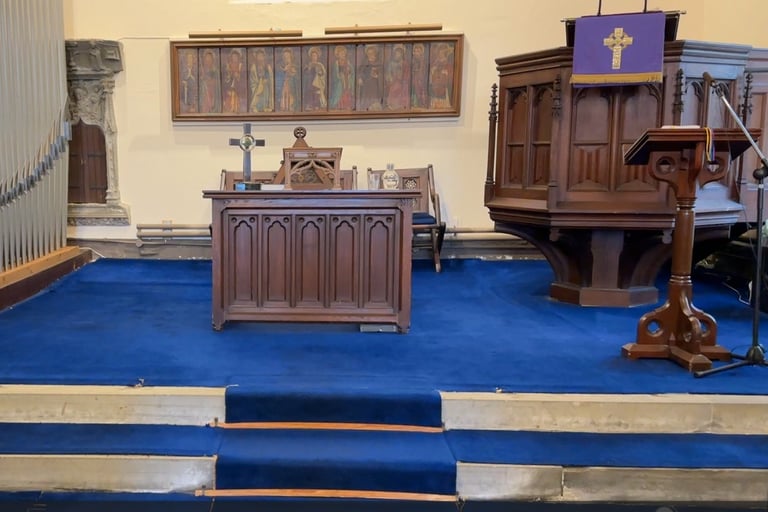
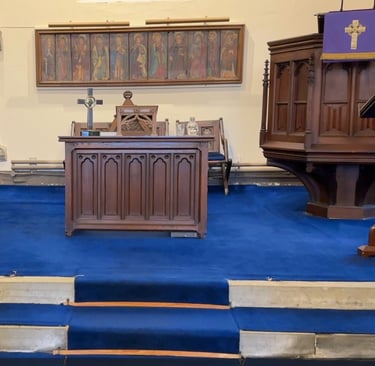
Raised by two (modern) steps, this was the holiest part of the pre-Reformation church, where the richly decorated altar stood and where the community of clergy assembled for the many services and rituals held throughout the day. Beneath the chancel is the Gray’s burial place (a right only rescinded in the 1880s). Tread softly in this church: there are also burials – of Murrays, the Gray’s successors – beneath the aisle.
Sacrament house or Aumbry
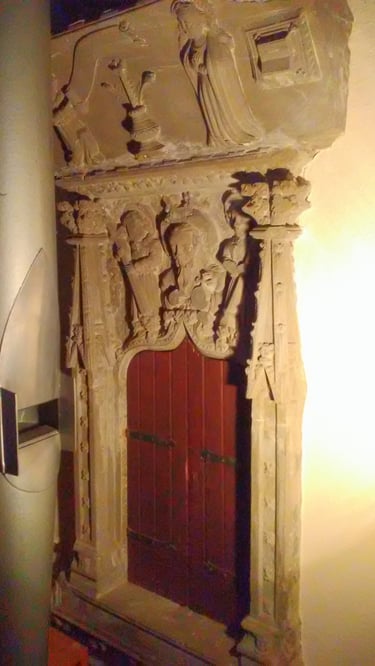
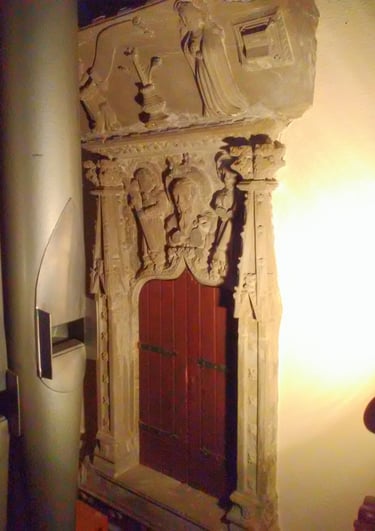
The sacrament house, or aumbry, was a recess where the consecrated bread and wine, representing the body and blood of Christ, was secured after communion. It was believed that these items retained their power and could be used again for further sanctification – taken out to the sick and bed-ridden, for instance.
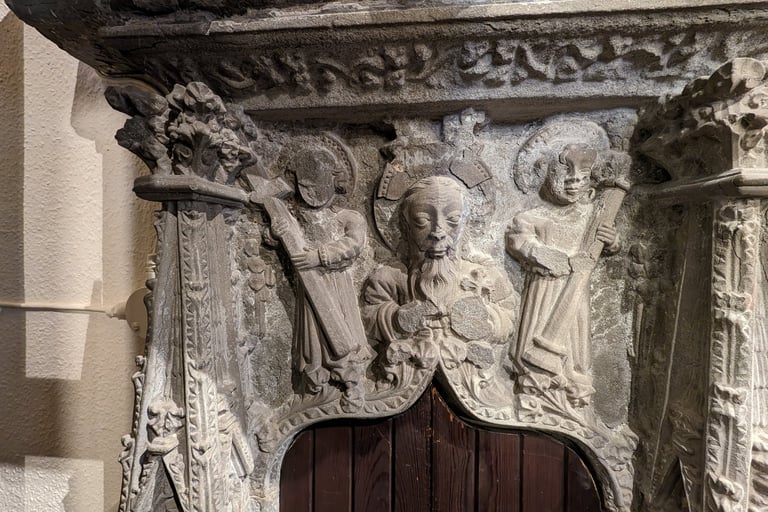
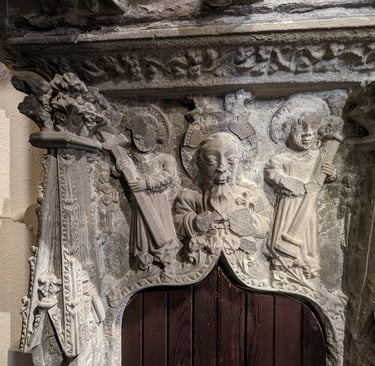
The Fowlis sacrament house is not only a particularly elaborate example but it also has a claim to fame as one of the three earliest dateable examples in Scotland. The others are St. Salvator’s College in St Andrews and Roslyn Chapel - august company!
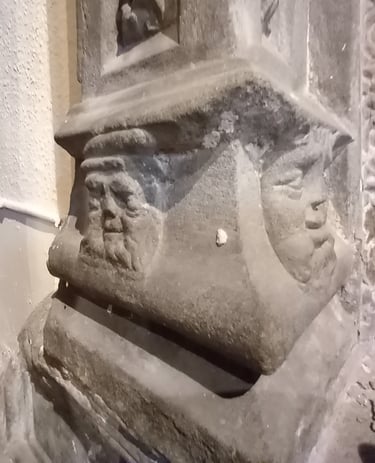
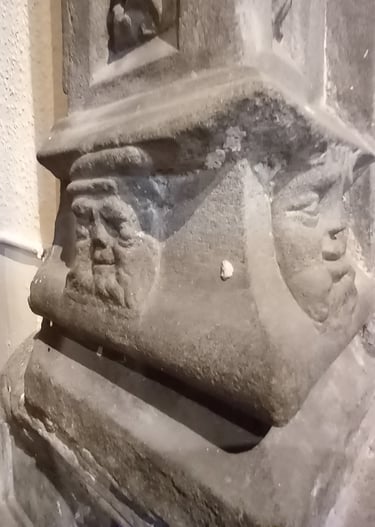
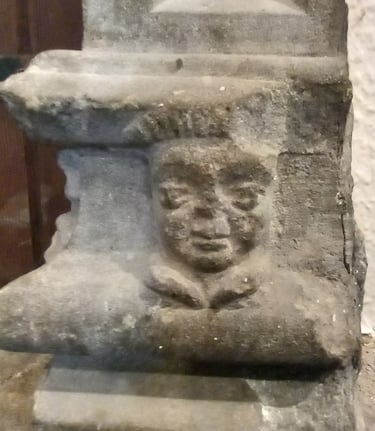
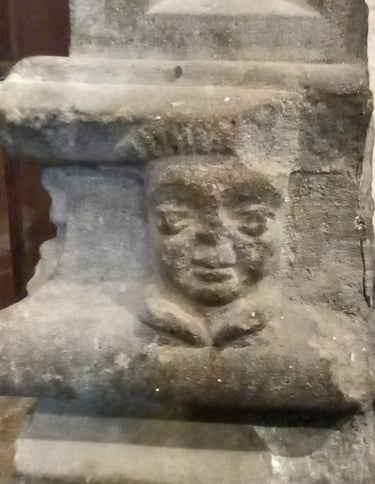
The scene above the opening depicts a strangely old-looking Christ (that he is Christ – as opposed to God – is made clear by his carrying the orb of the world), flanked by angels holding the cross and the pillar of scourging. The pilasters at the sides resemble those in wood on the rood screen doors. Cast your eyes to the bases of the columns and you’ll see where the sculptor has added some idiosyncratic little faces – see if you can spot the one with the ‘Oor Wullie’ hair-do and the man with cat’s ears!
The Annunciation
Set above the sacrament house (though this may not be its original position) is a beautifully carved Annunciation scene. The angel Gabriel on the left, with a great feathered wing, appears to Mary to announce that she has been chosen to bear the Son of God. Mary - her purity symbolised by the vase of lilies - turns tremulously towards her heavenly visitor. Her cherished Bible, which she has been reading, lies open on a delicately-fringed cushion. Gabriel's momentous words (like those of the centurion in the Crucifixion painting) are conveyed in the form of a speech scroll. But as it stands, the angel's scroll is blank. Could the message have been painted on? And if so, does this suggest that the whole scene may have been embellished with colour, bringing a further touch of sumptuousness to the rich ambiance of the chancel?
Contact
Get in touch for questions
stmarnocksfowlis@gmail.com
© 2025. All rights reserved.
Scottish Charity
Friends of St Marnock's
SC054653